
The sound of bells, masks, people running through the streets, and a life briefly freed from its usual rules…
Carnival always leaves exactly this kind of feeling behind. But why and how are carnivals celebrated in Portugal?
Carnival may end, but its energy lingers. It feels like an experience you cannot pack in your suitcase, yet somehow carry home with you.
Although I didn’t have the chance to experience carnival in many different places this year, based on what I learned and followed online, one thing is clear: the most powerful and authentic celebration was, as always, in Podence.
What Is Carnival in Portugal and Why Is It Celebrated?
Carnival is a festival celebrated just before Lent in the Christian calendar, leading up to Easter. It is not unique to Portugal; it is observed across many Christian countries following the same calendar.
Because Lent is traditionally a quieter and more restrained period, carnival emerged as the last great celebration of freedom, joy, and abundance before it begins.
That is why masks are worn, roles are reversed, streets turn into stages, and the rules of everyday life are temporarily relaxed.
At the same time, carnival is not only religious in origin. In many regions it is also connected to much older traditions related to:
-
Saying farewell to winter
-
Welcoming spring
-
Driving away evil spirits
-
Creating a sense of abundance and collective renewal
The bells and masks of Podence are a living expression of these ancient rituals.
How Was Carnival in Portugal This Year?
Carnival traditions in Portugal date back centuries and originate from the old festivities known as Entrudo. During this period, masks, playful water games, and social satire were common, and over time indoor celebrations moved into the streets, evolving into the parades we see today.
Rural Entrudo customs gradually merged with urban life and broader European carnival influences, giving rise to themed floats, large processions, and organized festivities.
Today, Portuguese carnival remains a layered cultural experience that blends authentic village rituals with the spectacle of major city celebrations.
Some of the places where carnival feels particularly vibrant include:
-
Torres Vedras – political satire and giant puppets (cancelled this year due to storms)
-
Ovar – samba influences and grand parades
-
Sesimbra – lively street celebrations and strong nightlife
-
Setúbal – local but energetic festivities
-
Loulé – one of the oldest carnivals in the Algarve
Still, Podence is undeniably the heart of carnival. The energy of Entrudo Chocalheiro is difficult to replicate anywhere else.
Even though I couldn’t attend many events this year, Lisbon’s celebrations felt somewhat quieter than expected for such a large city. The only one I personally attended was in Cascais — enjoyable, but more intimate and local in atmosphere.
The Meaning of the Podence Carnival
The Podence carnival is a living community tradition that has continued for centuries in a small village in the Trás-os-Montes region. Its recognition as UNESCO Intangible Cultural Heritage highlights its significance beyond the local level.
Carnival here is not something to simply watch — it is something you become part of. Historically, becoming a careto symbolized a transition from boyhood into adulthood. Over time, the celebration expanded to include women and children, transforming into a shared community experience.
Festivities usually run from Saturday through Tuesday and extend beyond the streets into homes, with visits, shared meals, and gatherings among neighbors.
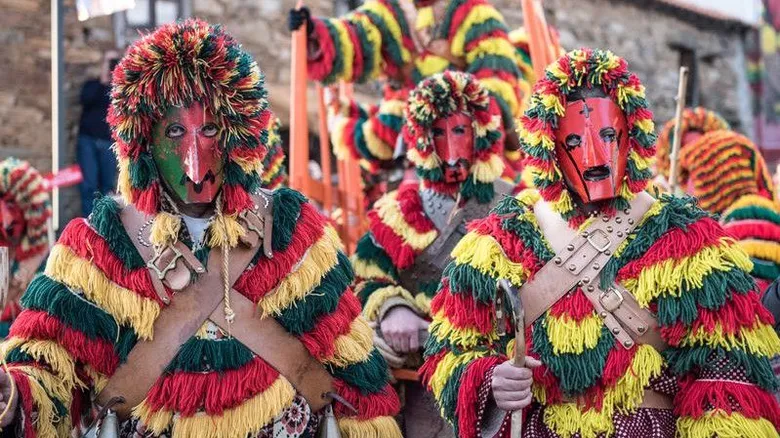
The caretos are at the center of the celebration. Loud, energetic, and intentionally mischievous, they represent a temporary escape from everyday rules.
Their masks — made from metal, leather, or wood — combined with colorful fringed costumes and belts of bells, create one of the most distinctive visual identities of Portuguese carnival. The rhythmic shaking of bells is linked to ancient fertility rituals and is seen locally as playful, symbolic, and a sign of good fortune.
The continuity of the tradition is supported by the local Caretos association, where children learn the customs early, masks are crafted, and rituals are passed down through generations.
Although Podence is usually a quiet village, it transforms completely during carnival. The Careto Museum offers visitors insight into the symbolism behind masks and costumes, while the nearby Azibo natural area provides a balance between cultural exploration and nature.
Carnival in Podence is not a spectacle staged for tourists; it is a genuine expression of community memory, renewal, and collective joy.
Carnival in Portugal Is Not Only Podence
Loures (Lisbon region) – One of the largest carnivals around Lisbon, dating back to 1934. Grand parades attract thousands of visitors, while events like Baile Trapalhão and the symbolic burial of the Carnival King add unique character.
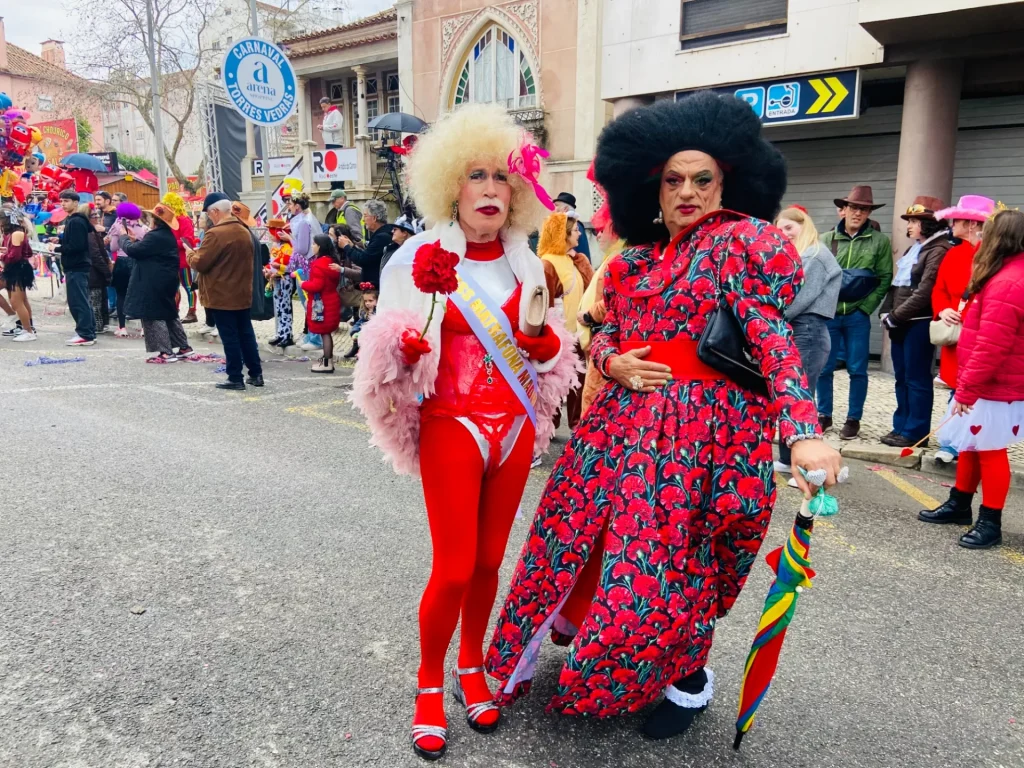
Torres Vedras – Often described as Portugal’s most authentic urban carnival. Known for political satire, giant puppets, and the tradition of matrafonas — men dressed as women — which humorously challenges social norms.
 Madeira – One of the country’s most spectacular carnivals. In Funchal, two main parades dominate: the organized allegorical procession and the spontaneous Trapalhão parade open to everyone. Historically, Madeira also played a role in spreading carnival traditions to Brazil.
Azores (Terceira Island) – Carnival takes a theatrical form through “Danças e Bailinhos,” community-based performances combining music, theater, and social commentary.
Canas de Senhorim – A centuries-old carnival with unique local rituals such as Pizões, Paneladas, and Queima do Entrudo.
Ovar, Sesimbra, Setúbal and Loulé – Each offers its own variation — from samba-inspired parades to lively neighborhood celebrations and historic regional traditions.
In Portugal, carnival cannot be reduced to a single place; each region reinterprets the same tradition through its own cultural lens.
Words That Stayed With Me After Carnival
Carnival is over, but after this experience, a few words are still echoing in our minds.
Chocalhos – Literally means cowbells.
But in Podence, they are more than just bells — they are the soul of the carnival. The bells tied around the waists of the caretos are meant to be as loud as possible.
Caretos – Masked, energetic, and slightly mischievous carnival figures.
With their colorful fringed costumes and metal masks, they are one of the most iconic symbols of Portuguese carnival. Feeling a little surprised the first time you see a careto is completely normal.
Chocalhadas – The act of shaking bells at someone while chasing them.
There is no exact equivalent in Turkish, but it could easily be described as one of the most entertaining parts of carnival.
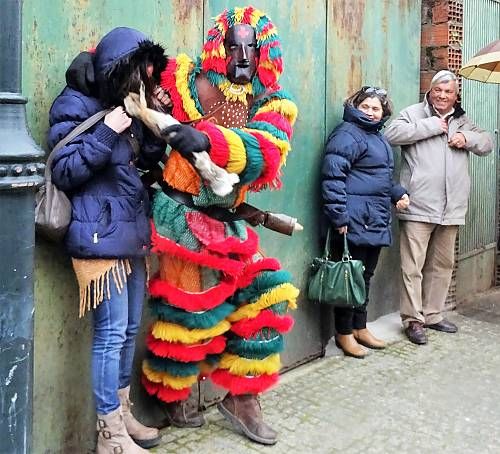 If a careto chooses you as a target, it is time to run.
Domingo Gordo & Terça-feira Gorda – The busiest days of carnival.
Here, “gordo” is not about food but about abundance and exaggerated celebration.
Domingo Gordo → the liveliest Sunday of carnival
Terça-feira Gorda → the final and peak day of carnival (Fat Tuesday)
The Feeling Carnival Leaves Behind
The most beautiful part of carnival is that it is not something you simply watch — it is something you feel.
Masks, sounds, laughter, and a brief return to childlike freedom.
Carnival is over. I’m already hoping to experience it more fully next year.
Perhaps truly understanding a country begins with the small details that stay with you long after the festivals end.